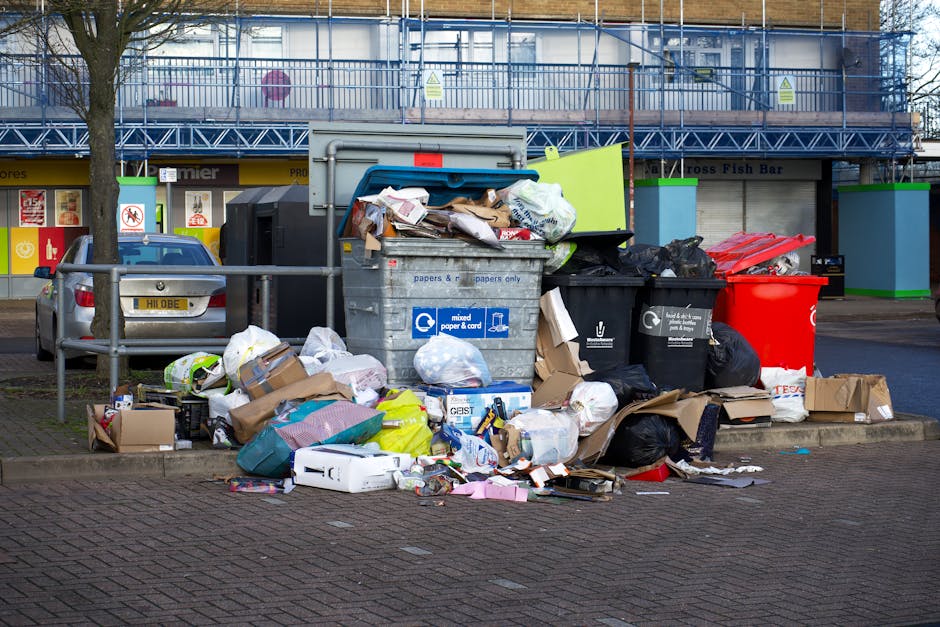
Gunnersbury Park rubbish removal guide for homeowners
If your shed is overflowing, the loft has become a mystery zone, or last weekend's DIY project left you with bags of rubble by the back gate, you are in the right place. This Gunnersbury Park rubbish removal guide for homeowners explains how to clear waste safely, legally, and without turning a simple job into a full weekend headache. It's written for real homes, real mess, and real constraints: tight access, shared driveways, awkward furniture, and the general chaos of family life. Truth be told, rubbish removal is one of those jobs that looks small until you start dragging things outside.
In this guide, you'll find a practical breakdown of how rubbish removal works, when it makes sense to book a professional clearance, what to watch out for, and how to avoid the common mistakes that cost time and money. You'll also see where services such as waste removal, home clearance, and garage clearance can help when the pile is bigger than expected.
One quick note before we get into it: if you are sorting mixed waste, heavy items, or anything awkward to move through a narrow hallway, planning matters more than brute force. A tidy approach saves mess, stress, and the classic "we'll deal with it later" pile that somehow returns by Tuesday morning.
Contents
- Why Gunnersbury Park rubbish removal guide for homeowners Matters
- How Gunnersbury Park rubbish removal guide for homeowners Works
- Key Benefits and Practical Advantages
- Who This Is For and When It Makes Sense
- Step-by-Step Guidance
- Expert Tips for Better Results
- Common Mistakes to Avoid
- Tools, Resources and Recommendations
- Law, Compliance, Standards, or Best Practice
- Options, Methods, or Comparison Table
- Case Study or Real-World Example
- Practical Checklist
- Conclusion
- Frequently Asked Questions
Table of Contents
- Contents
- Why Gunnersbury Park rubbish removal guide for homeowners Matters
- How Gunnersbury Park rubbish removal guide for homeowners Works
- Key Benefits and Practical Advantages
- Who This Is For and When It Makes Sense
- Step-by-Step Guidance
- Expert Tips for Better Results
- Common Mistakes to Avoid
- Tools, Resources and Recommendations
- Law, Compliance, Standards, or Best Practice
- Options, Methods, or Comparison Table
- Case Study or Real-World Example
- Practical Checklist
- Conclusion
- Frequently Asked Questions
Why Gunnersbury Park rubbish removal guide for homeowners Matters
Rubbish removal matters because waste has a way of multiplying. A few boxes in the hallway become a blocked landing. A broken wardrobe becomes splintered wood, screws, old packaging, and suddenly the room feels smaller. For homeowners in Gunnersbury Park, the challenge is often less about having "too much rubbish" and more about having the wrong kind of rubbish in the wrong place at the wrong time.
This guide is especially useful if you are managing a clear-out around work, school runs, renovation schedules, or a move. The area's homes vary a lot in layout, which means access can be straightforward one minute and fiddly the next. Narrow side passages, shared entrances, and parked cars can all make a simple collection feel more complicated than it should. That's where good planning pays off.
There is also a trust factor. Homeowners want to know their waste will be handled properly, recycled where possible, and disposed of responsibly. That is fair enough. Nobody wants to pay for a removal only to wonder where the waste ended up. A reliable service, backed by clear communication and sensible handling, gives you peace of mind along with a cleaner property.
Expert summary: The best rubbish removal job is the one you barely have to think about. Clear categories, clear access, clear pricing, and clear responsibility. Simple on paper, but it makes all the difference in real life.
How Gunnersbury Park rubbish removal guide for homeowners Works
At a practical level, rubbish removal is a process of sorting, lifting, loading, transporting, and disposing of unwanted items in a compliant and efficient way. For homeowners, it usually starts with a rough estimate of volume and type of waste. That part matters more than people expect. Mixed waste, builder's debris, old furniture, green waste, and electrical items can all need different handling.
Most jobs follow a simple pattern:
- Identify the waste - separate general rubbish, furniture, garden waste, and anything potentially hazardous.
- Check access - stairs, narrow doors, parking space, and distance from the property all affect the job.
- Book the right service - for example, furniture disposal for sofas and wardrobes, or garden clearance for branches, soil, and cuttings.
- Prepare the waste - bag loose items, keep sharp edges contained, and place heavier items where they can be collected safely.
- Load and remove - the team removes waste, often with a quick sweep-up afterwards.
- Sort for reuse or recycling - where suitable, items are separated from general waste.
To be fair, many homeowners expect the hardest part to be the lifting. Often it is actually the decision-making. What counts as general waste? What can be reused? What should be kept aside for a specialist service? These are the little questions that slow everything down.
If the waste comes from a renovation, it may be better to use builders waste clearance rather than forcing mixed debris into a standard home clear-out. Likewise, if a house move or bereavement has left you with a full property to empty, a broader house clearance or flat clearance may be the better fit.
Key Benefits and Practical Advantages
The obvious benefit is space. But the deeper value is calm. Once unwanted items are out, rooms feel easier to use, clean, and think in. You notice the difference at once - a hallway with room to breathe, a garage you can actually park in, a loft that no longer feels like an archaeological project.
Here are the benefits homeowners usually notice first:
- Less clutter and better use of space - ideal before decorating, selling, or simply reclaiming a room.
- Safer movement around the home - fewer trip hazards, blocked exits, and unstable stacks.
- Faster project progress - DIY, moving, and redecorating are easier when waste is not in the way.
- Better handling of awkward items - sofas, broken cabinets, mattresses, and bulky rubbish are moved properly.
- Reduced disposal stress - no van hire, no repeated tip runs, no guessing what goes where.
- More responsible disposal - sorting and recycling can be managed by people who do this day in, day out.
There is also a quiet financial benefit. Clearing waste in one organised visit can often be more efficient than making several small trips yourself, especially if you factor in fuel, time, parking, lifting, and the inevitable second cup of tea you need afterwards.
Homeowners sometimes ask whether it is worth booking a clearance for "just a few items". Sometimes yes, sometimes no. If those few items are bulky, heavy, or hard to dispose of legally, the answer leans strongly towards yes. A single old sofa can be more trouble than half a dozen black bags.
Who This Is For and When It Makes Sense
This guide is for homeowners who want a clean, practical approach to waste removal without having to manage every tiny detail themselves. It suits people clearing a single room, a whole property, or a specific problem area like a loft, garage, or garden.
It makes the most sense if you are dealing with:
- post-renovation debris or leftover DIY materials
- broken furniture or unwanted household items
- garage, loft, or shed clutter
- garden cuttings, soil, and outdoor waste
- pre-sale or pre-rental decluttering
- moving house and sorting out what stays and what goes
- general accumulated waste that has outgrown your bins
If you are dealing with soft furnishings, one route might be furniture clearance, especially when there are several bulky pieces. If the issue is a cramped storage space full of old boxes, tools, and random bits from the last ten years - we all have one - garage clearance or loft clearance may be the more realistic option.
For homeowners with particularly full properties, a broader home clearance can be the cleanest route because it keeps the job in one place, one schedule, one set of hands. That simplicity matters more than people think.
Step-by-Step Guidance
Here is a straightforward way to tackle rubbish removal without spiralling into a half-finished weekend. Small steps. That's the secret.
- Walk through the property
Start with a calm look at what needs to go. Make a quick note of bulky items, loose waste, and anything that might need special handling. - Group items by type
Keep furniture, garden waste, general rubbish, and renovation debris separate where possible. A mixed pile is slower to clear and harder to price accurately. - Measure access, not just waste
Think about stairs, stairwells, gate width, parking, and whether large items can fit through the hall. Access often affects the job more than the volume itself. - Remove hazards early
Put aside broken glass, nails, sharp timber, and anything leaking or dusty. If a bag tears in the hallway, suddenly nobody is having a nice day. - Choose the right service type
For example, renovation debris may suit builders waste clearance, while office overflow from working at home may be better handled through office clearance if the items are desks, chairs, and files. - Ask for clarity before booking
Check what is included, whether loading is part of the service, how recycling is handled, and whether there are restrictions on certain items. - Prepare the collection area
Move items as close to the exit as practical, but only if it is safe. Don't block walkways or create a trip hazard. - Do a final sweep
After removal, inspect the area. A few forgotten screws or a strip of packaging can be annoying later on, especially under bare feet.
If the job is mainly one item, such as an old sofa or mattress, disposal can be simple. If it involves several rooms, it may be better to book a larger clearance so the whole thing is handled in one visit. Less faff. More done.
Expert Tips for Better Results
In our experience, the best rubbish removal jobs are the ones that are prepared with a little more care than you think necessary. That extra ten minutes can save a surprising amount of time later.
- Photograph the waste before booking - pictures help with estimating quantity and identifying awkward items.
- Keep like with like - put wood with wood, garden waste with garden waste, and general rubbish together if possible.
- Break down safe items - flat-packed furniture, disassembled shelving, and collapsed cardboard are easier to load.
- Protect floors and walls - old blankets or cardboard can help if items need to be moved through tight spaces.
- Be honest about hidden waste - people often forget what is behind the shed, under the stairs, or in the far corner of the loft.
- Leave access space for the team - a clear route matters more than having every item stacked perfectly.
A small but useful tip: if your waste includes a few items you may still want, set them aside in another room before the clear-out begins. It avoids the slightly awkward moment when something useful disappears into the pile. Happens all the time.
Also, if you are unsure whether an item is genuinely rubbish or something that could be reused, stop and think for a minute. That pause can save money and waste. A chair that needs reupholstering is a different decision from one that is wobbling like a shopping trolley.
Common Mistakes to Avoid
The biggest mistake is underestimating volume. A room that looks "nearly empty" can still produce a van full of waste once cupboards, drawers, and corners are cleared. Homeowners often discover this halfway through a job, usually with a tired expression and one tea left in the pot.
Other common mistakes include:
- Mixing different waste types without checking whether the service can handle them
- Ignoring access issues until collection day
- Leaving loose sharp items exposed
- Booking the wrong service for the material involved
- Assuming every item is recyclable in the same way
- Not asking how pricing is calculated
Another subtle mistake is trying to "save time" by piling rubbish where it blocks the route out. That usually slows everything down. It's one of those plans that sounds efficient at 9 a.m. and feels silly by 11.
If the waste includes a mixture of home clutter and garden debris, consider whether garden clearance and household waste need to be separated before collection. That small bit of sorting can make the whole process smoother and more accurate.
Tools, Resources and Recommendations
You do not need fancy equipment for most home rubbish removal jobs, but a few basics make life easier:
- Heavy-duty bin bags for loose waste and smaller items
- Gloves for grip and protection
- Box cutter or screwdriver for dismantling safe furniture
- Dust sheets or old cardboard to protect floors
- Marker pen and tape to label keep, donate, and remove piles
- Trolley or sack barrow if you are shifting heavier items safely
For homeowner planning, the most useful "resource" is often a clear room-by-room walk-through. Start with the loft, then the garage, then any outdoor storage. Those are the places clutter hides best. Sneaky, really.
If you want an organised household project rather than a one-off haul, it can help to combine services sensibly. For example, a garage packed with old tools and furniture might benefit from a garage clearance, while spare chairs and tables may be more suited to furniture clearance. Matching the job to the waste type tends to deliver cleaner results.
For readers who want a broader overview of how a provider handles responsible disposal, recycling and sustainability is worth understanding before you book. It gives you a better picture of how reusable materials are separated from mixed waste.
Law, Compliance, Standards, or Best Practice
Waste handling in the UK is not something to treat casually. Homeowners do not need to become experts in regulations, but they should know the basics: waste must be removed and disposed of responsibly, and you should be careful about who you hand it to. If a clearance operator is vague about disposal, that is a yellow flag at the very least.
Best practice usually includes:
- clear description of the waste before collection
- sensible segregation of recyclable and non-recyclable items
- safe handling of heavy, sharp, or awkward materials
- careful treatment of any items that may need special disposal
- documentation or confirmation where appropriate
If you are clearing builder's waste, remember that rubble, plasterboard, timber, and mixed debris may need different handling. That is one reason a dedicated builders waste clearance service can be more practical than a generic rubbish collection. It reduces confusion and helps avoid mistakes.
For homeowners, the simplest rule is this: if you would not confidently put the item in a normal household bin, pause and check the right route first. Batteries, chemicals, paint, sharp metal, and electrical items are the sorts of things that deserve extra care. No need to overcomplicate it, but don't wing it either.
Options, Methods, or Comparison Table
There is more than one way to clear rubbish from a home. The best method depends on the amount, the type, your time, and how much lifting you want to do yourself. Below is a simple comparison to help with decision-making.
| Method | Best for | Pros | Watch out for |
|---|---|---|---|
| DIY tip runs | Small loads and straightforward waste | Can feel cheaper if you already have transport | Time, fuel, lifting, multiple journeys, parking hassles |
| Skip hire | Longer projects with predictable waste volume | Handy for ongoing clear-outs | Space needed, loading effort, permit considerations |
| Professional rubbish removal | Bulky, mixed, or urgent waste | Fast, convenient, loading included | Pricing depends on volume and access |
| Specialist clearance | Furniture, lofts, garages, gardens, or full houses | Better suited to the exact waste type | Needs accurate description of the job |
For many homeowners, professional removal is the middle ground that feels easiest to live with. It is quicker than doing it all yourself, but more flexible than arranging a skip if the waste is mixed or the access is awkward. And let's face it, not every property wants a giant metal box sitting outside the front for a week.
If your issue is a larger domestic declutter rather than a single pile of rubbish, a house clearance may be the more efficient option. If the job is more contained and you want a straightforward tidy-up of a property, home clearance can be a neat fit.
Case Study or Real-World Example
Picture a typical Gunnersbury Park homeowner on a Saturday morning. The plan seems simple: clear the garage, take down an old shelving unit, get rid of two broken chairs, and shift a stack of garden cuttings from the back corner. By 10:15, the garage smells faintly of damp cardboard and old paint tins, the shelving unit has split into three awkward shapes, and there is a growing pile of dust where nobody wanted one.
Instead of turning it into a whole-day ordeal, the homeowner sorts the items into three groups: furniture, garden waste, and mixed rubbish. The bigger pieces are noted separately, access through the side path is checked, and the work is booked in one go rather than spread over several weekends. The result is tidy, fast, and not nearly as stressful as trying to do it in bits.
That is the pattern we see most often. People do not usually need more effort; they need better sequencing. Once the waste is grouped properly and the right service is chosen, the rest becomes much simpler.
In this sort of situation, it can also make sense to use a dedicated service such as garage clearance or furniture disposal, rather than treating everything as generic rubbish. The outcome is usually smoother, and the property feels transformed faster than expected.
Practical Checklist
Use this checklist before booking or starting a rubbish removal job at home:
- Walk through every room, loft, garage, or garden area involved
- Separate furniture, garden waste, builders waste, and general rubbish
- Check whether any items need special handling
- Measure access routes, doors, steps, and parking space
- Decide whether you need a single-item removal or a broader clearance
- Take a few photos of the waste
- Clear a safe path to the items
- Move valuables and keep-sakes out of the collection area
- Ask about loading, disposal, and recycling
- Confirm the collection time and make sure someone is available
If you can tick most of those off, the job tends to go more smoothly. Not perfect. Just much smoother.
Conclusion
A good rubbish removal plan does more than empty a room. It resets the space, reduces stress, and stops a messy corner of the home from hanging over you for another month. For homeowners in Gunnersbury Park, the key is to match the method to the waste: furniture, garden cuttings, loft clutter, builders debris, or a full home clear-out all benefit from the right approach.
Start by sorting the waste, checking access, and choosing the service that fits the job rather than forcing everything into one category. That little bit of thought upfront pays off quickly. And if the pile looks bigger than expected, that is normal. It really is.
Get a free quote today and see how much you can save.
Frequently Asked Questions
What counts as rubbish removal for a homeowner?
It usually covers the collection and disposal of unwanted household items, mixed waste, furniture, garden debris, and sometimes renovation leftovers. The exact scope depends on the service you book.
Is rubbish removal better than hiring a skip?
It depends on the job. Rubbish removal is often better for bulky, mixed, or awkward waste because the loading is handled for you. A skip can suit longer projects, but it needs space and manual loading.
How do I know whether I need home clearance or house clearance?
Home clearance is often used for broader domestic decluttering, while house clearance usually suggests a fuller or more complete property clearance. If you are unsure, describe the waste and the number of rooms involved.
Can furniture be removed with general rubbish?
Sometimes yes, but it is often better to separate bulky items into a dedicated furniture service. That makes pricing clearer and helps with handling and recycling.
What should I do before a waste collection arrives?
Group similar waste together, clear a path, protect fragile surfaces if needed, and make sure access is open. If items are in the loft or garage, move them somewhere safe and easy to reach.
Are garden cuttings and old outdoor items treated differently?
Often they are. Garden waste such as branches, grass cuttings, and soil may need a garden-specific clearance. Mixed outdoor clutter can sometimes include furniture or building materials, which changes how it should be handled.
Can I include DIY rubble and renovation waste?
Yes, but it is best to make that clear in advance. Rubble, timber, plasterboard, and mixed builders waste may be better suited to builders waste clearance rather than a standard domestic rubbish collection.
How do access issues affect rubbish removal?
Access matters a lot. Tight stairs, long carry distances, restricted parking, or narrow side passages can all affect the time and effort needed. Honest details upfront help avoid problems on the day.
Is it worth booking a clearance for just a few bulky items?
Often, yes. One sofa, mattress, or broken wardrobe can be awkward to move and harder to dispose of legally on your own. A removal service can save a lot of hassle for a relatively small job.
What happens to the waste after collection?
It is normally sorted for reuse, recycling, or disposal, depending on the material and condition. A responsible service will aim to separate recyclable items where possible.
How can I keep costs under control?
Sort waste before collection, be accurate about volume, and choose the right service type. Clear access and grouped items can also make the job more efficient, which helps avoid surprises.
What if I am clearing a loft or garage full of mixed items?
That is common, and it is exactly where a specialist clearance can help. Loft and garage clear-outs often include a mix of old storage, furniture, broken household items, and random bits that have accumulated over years. A more targeted service usually works best.
If you want a cleaner home, a calmer weekend, and one less pile of "I'll deal with it later", a well-planned rubbish removal job is a solid place to start. Small progress counts, and sometimes it changes the whole feel of a home.